Insights from a viral industry discussion that every cafe owner needs to read about decaf
Last week, a post titled “What do you do if someone wants decaf?” sparked a heated discussion in the coffee community, with nearly 30 industry professionals sharing their struggles, workarounds, and hard-earned lessons.
And buried in that conversation? A massive opportunity that most equipment distributors are completely missing.
The Community Weighs In: Five Solutions, Five Problems
That Reddit-style post laid out the options cafe owners are actually using. Let’s break down the 5 solutions:
Solution 1: Pre-Grind and Store
“Grind the decaf when nobody’s around, a day’s worth at a time, and keep sealed up when not dispensing.” — John Campbell
The problem: Coffee starts losing flavor the moment it’s ground. Pre-grind decaf sitting in a canister for hours? By the time it hits the portafilter, all you’re extracting is bitterness. Decaf drinkers may not want caffeine, but they still want good coffee. Serve them stale shots, and they won’t come back.
Solution 2: Keep Instant Decaf on Hand
“I keep instant decaf espresso on hand. It wasn’t worth it for me to get a decaf setup for the very few requests I get.” — Amber Nipper
The problem: This is a compromise on quality, plain and simple. If your cafe positions itself as specialty, serving instant-based drinks sends the wrong message. It tells customers you only care about the easy orders.
Solution 3: Just Don’t Offer It
“I just didn’t offer decaf for the first year. It was requested so rarely that it wasn’t worth it.” — Cody Maynard
The problem: Terry Paton’s response says it all: “I have customers that avoid other vendors who have stale decaf or no decaf at all…. Meaning if they are with a group you lose the whole group.” And Paige’s comment hits even harder: “My ONLY negative review in 2yrs was not having decaf.” One negative review. Two years of otherwise great service. All because of one missing option.
Solution 4: French Press or Pourover as Backup
“I was thinking about maybe having a pour over or French press just for decaf when requested.” — Paige Lynn Salinaz
The problem: If your menu says “decaf latte,” customers expect an espresso-based drink. French press coffee with steamed milk is not a latte. It’s a compromise that disappoints expectations.
Solution 5: Get a Second Grinder
“Buy a used high end grinder. I have customers that avoid other vendors who have stale decaf or no decaf at all.” — Terry Paton
“I finally got a smaller second grinder… my ONLY negative review in 2yrs was not having decaf. Saved and finally made it happen.” — Aubrey Long
This is the only real solution. But here’s the catch: most second grinders on the market today aren’t designed for this job.
Why a Second Grinder Isn’t a “Luxury” — It’s a Business Essential
Read Terry and Aubrey’s comments carefully. A second grinder delivers value far beyond “being able to serve decaf.”
1. It Keeps Groups Together
Terry nails it: decaf drinkers rarely come alone. When one person in a group asks for decaf and you don’t have it, you’re not losing one drink — you’re losing the whole table’s business for the afternoon.
2. It Prevents Negative Reviews
Aubrey’s story should wake up every cafe owner: two years of operation, one negative review. And it was about decaf. One review on Google or Yelp can cost you dozens of customers. Compare that to the cost of a second grinder.
3. It’s Your Emergency Backup
This is the angle most people miss. Terry again: “Several times over the years my main grinder has gone down during a busy day and I simply switched to my decaf grinder. Be prepared — it only takes once to lose a day’s pay that would have bought you a backup.”
Think about it: Your second grinder isn’t just a decaf solution. It’s business interruption insurance. One main grinder failure during a Saturday rush could cost you more in lost revenue than the grinder itself.
The Market Gap: Why Existing Options Fall Short
If a second grinder makes so much sense, why are so many cafe owners still hesitant? Look at what’s currently available:
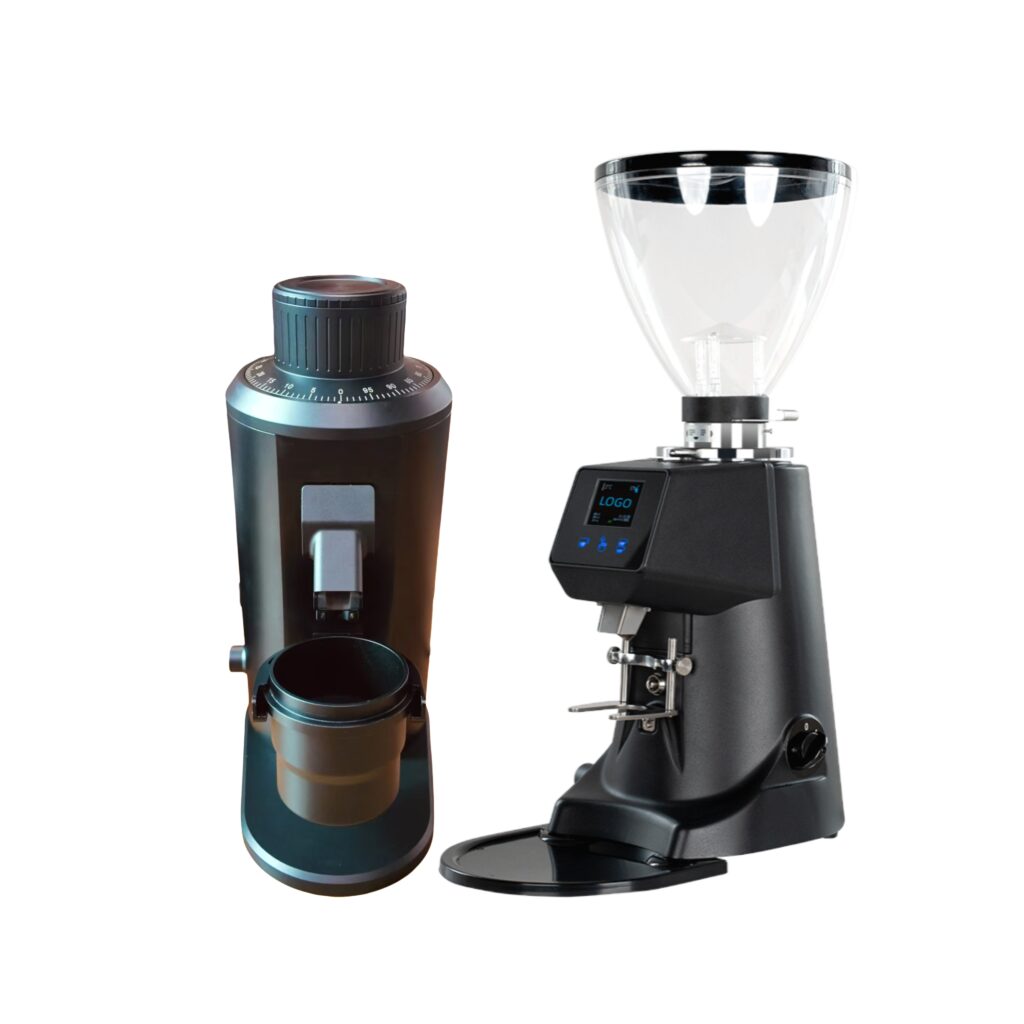
Option A: High-End Main Grinders
- ✅ Excellent performance, rock-solid reliability
- ❌ Priced at $2,000+, overkill for decaf-only duty
- ❌ Large footprint eats up precious counter space
Option B: Used Commercial Grinders
- ✅ Lower upfront cost
- ❌ Unknown wear and tear, inconsistent condition
- ❌ No warranty, no support when things go wrong
- ❌ Usually just as bulky as new high-end models
Option C: Single-Dose Grinders
- ✅ Maximum freshness, grind-to-order
- ✅ Compact size
- ❌ 50-60g hopper capacity — good for 2-3 shots, useless for a rush
- ❌ Requires weighing each dose, different workflow = training headache
- ❌ Can it really handle backup duty when your main grinder dies?
Option D: Home-Grade “Mini” Grinders
- ✅ Cheap
- ❌ Not built for espresso consistency
- ❌ Motors overheat with continuous use
- ❌ Not commercial-grade, period.
Notice the gap? There’s nothing designed specifically for the “second grinder” use case.
The Ideal Second Grinder: Finding the Sweet Spot
Based on what the community actually needs, here’s what a purpose-built second grinder should look like:
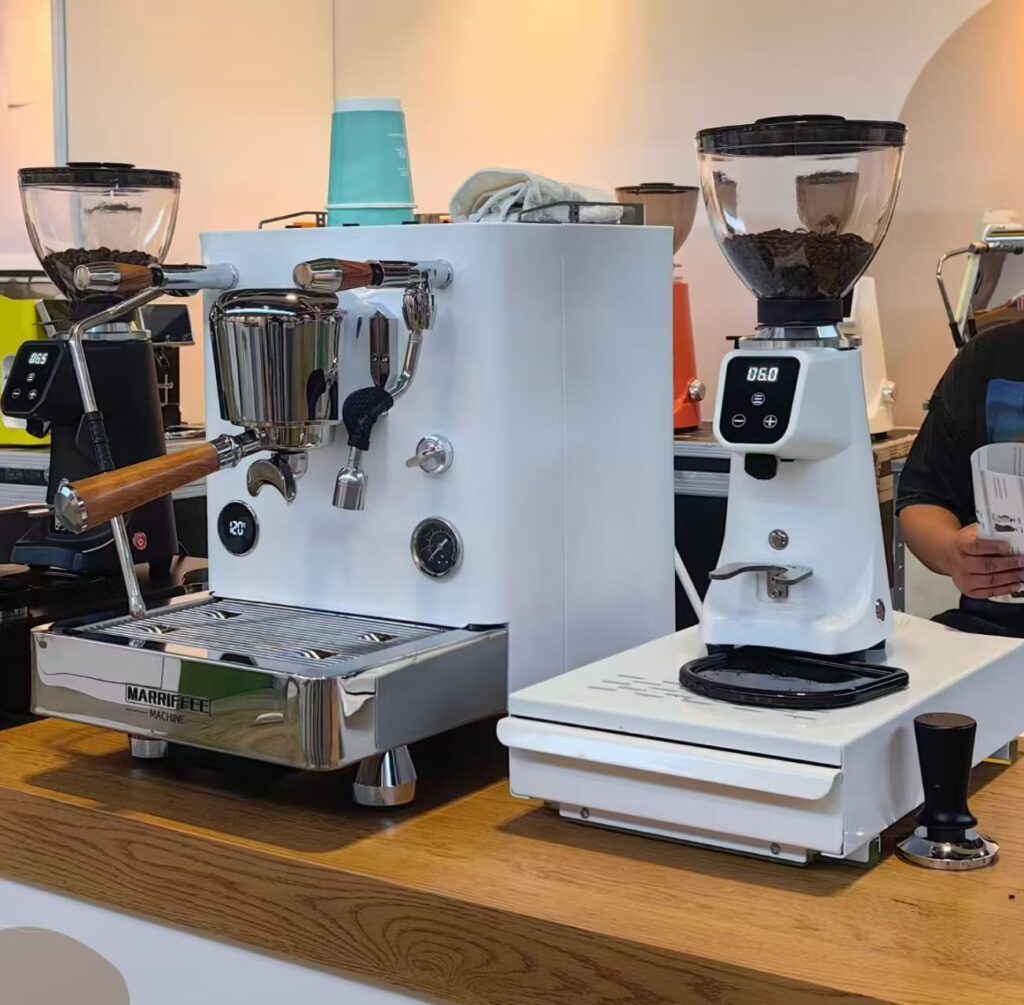
1. Hopper Capacity: The Goldilocks Zone — 200-500g
2. Commercial-Grade Grind Quality
Decaf beans have different physical properties than regular beans. They need:
- Commercial-grade burrs (flat or conical) for consistent particle size
- Precise adjustment range for espresso-fine grinding
- A motor built for continuous duty, not intermittent home use
3. Compact Footprint
Bar space is prime real estate. A true second grinder should:
- Fit in corners and tight spaces (under 5-6 inches wide)
- Look clean and professional, not like an afterthought
- Be easy to pull out when needed, tuck away when not
4. Realistic Price Point
If a grinder costs over $1,000, most owners won’t buy it for “maybe 2 decaf drinks a week.” The sweet spot is:
- $300-500 range — accessible without a major budget decision
- Clear ROI: One saved group sale or one avoided negative review pays for it
5. Intuitive Operation
Your baristas shouldn’t need retraining:
- Clear, repeatable grind settings with memory
- Dosing method consistent with your main grinder (timed or manual)
- Simple cleaning and maintenance
What This Means for Equipment Distributors
Here’s the opportunity you might be missing:
How many of your cafe clients currently don’t offer decaf?
Ask why. Is it really “nobody asks,” or is it because they don’t have the right tool?
How many run a single grinder with no backup?
Have they calculated the cost of a main grinder failure during a busy shift?
Does your price list include anything specifically positioned as a “second grinder” solution?
The specialty coffee market is evolving. More health-conscious consumers. More afternoon and evening coffee occasions. More demand for options that don’t compromise on quality.
The cafes saying “nobody asks for decaf” today will be losing customers to competitors who figured it out tomorrow.
The Bottom Line
Remember that Saturday afternoon scene from the beginning?
Now imagine that cafe had the right second grinder — compact enough to tuck away, a hopper sized for fresh-but-not-fussy decaf storage, commercial grind quality at an approachable price.
What happens next?
The four customers enjoy their drinks. One posts an Instagram story tagging the cafe. Next week, her team books their afternoon meeting there.
That little grinder didn’t just make one decaf latte. It kept a table happy, generated social exposure, and probably secured future group business.
The question isn’t whether cafes can afford a second grinder. It’s whether they can afford not to have one.
About Geephoon: We build equipment for the real-world needs of specialty cafes. Our C7 commercial grinder features a 200g compact hopper, commercial-grade 58mm flat burrs, and a footprint that fits anywhere — designed specifically for decaf programs and backup duty. Because every customer matters, and every sale counts.
Interested in distributing? DM us or email for wholesale inquiries.
#CoffeeEquipment #EspressoGrinder #CafeBusiness #CoffeeDistributor #DecafCoffee #SpecialtyCoffee #CoffeeCommunity